India is a country with estimated population of 146.39(in crores), and in other words 1.460 billion. The Demography of India is widely diverse in terms of places, languages, climate, customs, cultures, origins, races, religions, land structures, natural resources, artifacts, monumental structures, habitats and livelihood.
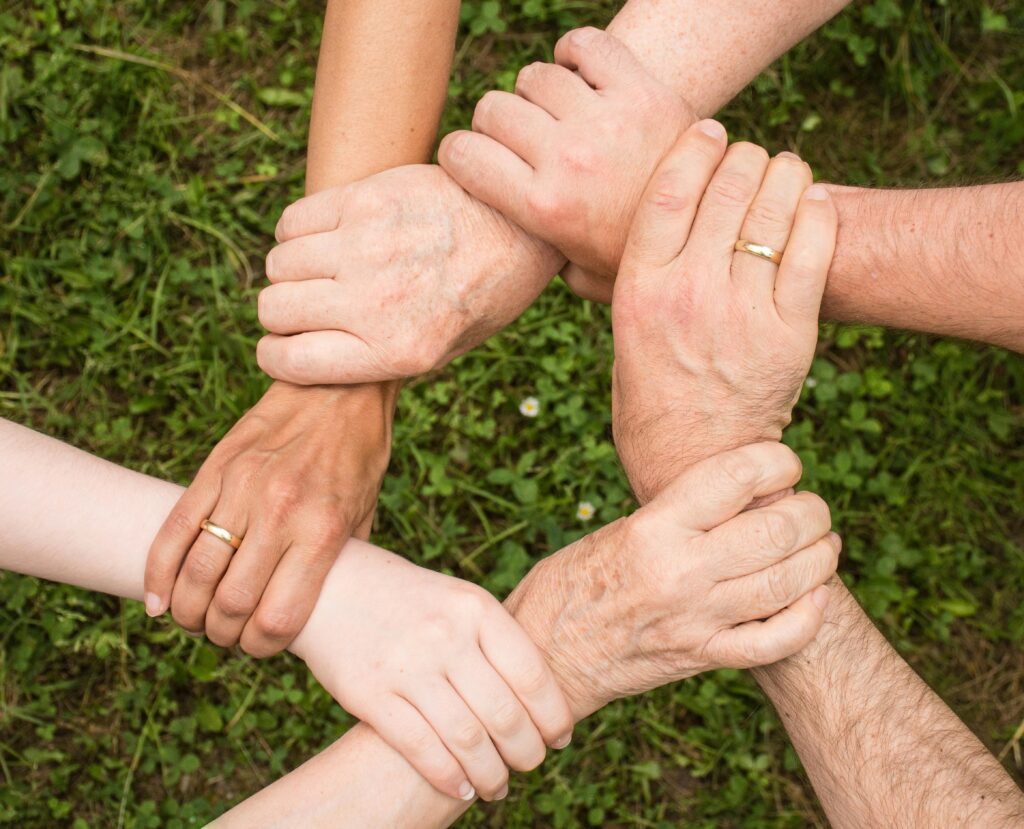
There are three perspectives in terms of India as a nation:-
A) Social Scenario B) Political Scenario C) Judicial Scenario
Those are discussed below:
A) Social Scenario: The nature of Indian society is patriarchal that is lineage is through hereditary males. Society consists of group of people embedded together or a web of families as an institution which plays a major role in structuring a society. The other factors which are pivotal towards building development are discussed below:-
- Schools (Educational Institutions) :- A personality of a human being is shaped from his/her childhood, starts from womb to tomb. Hence, knowledge is an aspect which is transferred by the teachers in schools and professors in college. The culture of India or the Indian tradition was unlike western system. The Indian Language was known to be Sanskrit rather than English. The Indian system of knowledge was Vedic/Gurukul system of Learning unlike school system of Learning, mentioned in Ramayana a historical or Ancient text/scripture during 500-300 BCE in Treta Yuga. The Indian decline of morality and increasing criminal ratios are due to system being followed which are given by colonizers. The Holistic development of a children is diminishing due to such loopholes as an impact is seen as lacking decision-making ability, and on other psychological parameters as well with increasing anxiety and neuro-psychotic disorders is seen among Indian population today. This impacts the social scenario directly or indirectly.
- Peer Groups(friend circle) :- The nature of human beings is to imitate what they see and to tolerate which is unknown. Peers or the surrounding people are the one’s who impact a person’s ability to introspect between the sound and the unsound, or, ethically right or wrong. The person grow between the peer he/she chooses to be with up to a certain duration. Hence, he/she becomes like his/her peer group. The intake of wrong content may lead to transform one towards wrong activities, which most certainly leads to behavioural flux. So, it leads to a chaotic prolegomena in the societal structures. The cultural changes or shifts from a tradition to intermixing of various cultures is portraying towards lacking identity of certain natives of ancient India. Peer groups play a major role in maintaining the identity of people and a country, both internally and externally (International boundaries).
- Media and Communication:- The media and communication is basically divided into various sources such as mobile phones, televisions, newspapers and softwares. The digital intake is increasing rapidly due to trading entrepreneurs and larger business industries setting up in India in the form of multinational companies. The news and information which is available through different channels is manipulated through different channels is through party corruption and political benefits or elite powers through legalized authority. Politicization of media is impacting the grassroot citizens who are subject to lacking awareness and knowledge. The grassroot citizens at the remote areas lacking network facilities, transportation, basic health services or infrastructural underdevelopment as well. The Political actors curate strategies for the party vote bank by applying the technique of Divide and Rule as India has a varying diversity in races, religion, community, languages, cultures, origins, natural resources. This generally occurs during or before the conduct of elections seeking huge number of votes polled. These diversity can act both as a boon and a ban which is discussed below: 3.a. Boon– The proper utilization of these resources will lead to maximizing sustainable environment with a healthy economic structures. These can generally attract or open ways to investment in India for various multinational companies and various renewable recyclable industries to set up infrastructures as India is a fully developing nation currently. The Indian Heritage is rich in Cultures, Monuments, Dance forms, music, different food cuisines which also plays a major role in Indian economy. For example- Assam’s Raw Tea Export to other parts of the world. 3.b. Ban– This diversity hinders among the citizens and impacts the political culture of a nation, by hollowing the nation and its development, the unity therein remains unstable or disbalanced. Hence, the lacking voting awareness is seen among citizens which ultimately leads to segregation of votes polled during an election. The present coalition system of government or alliance building strategy came to exist due to the above mentioned reasons. This is a sign of weakening democracy of a nation
- Family: Family plays a key role in shaping the behavior of a children which will lead to a human with values or human of dishonour. Family values are imbibed during the period of a child’s growth which stays with him/her in the long run. Family is the first temple of learning in a child’s life from where he/she learns language and manners to behave in a society. The family is the first and foremost where a person learns to interact kindly and knows little by little about these greater world. There are families of nuclear and joint. Today, most of the families are likely nuclear kind in nature, where the child grows between very few members. The causes may be of work/profession or any other.
- Social Stratification: The society is divided into various layers of cultures, castes, community, race, religion, and many more. This stratified layer consists of variety of people and their identity. The social stratification in any society acts as an advantage for the upper layers and disadvantage at the lower layers in certain issues of discrimination. Here comes the reservations among citizens say as a) Unreserved b) Other Backward Classes c) Scheduled Castes d) Scheduled Tribes. This system was implemented for 30 years from the date of Independence by Dr. B. R. Ambedkar whereas the nation is still continuing this system of reservation till date of 2026 and further. Hence the scenario has changed to an upside down model of reservation in the present society. This factor effects the Indian Social Scenario.
- Social Stereotypes: There are certain activities those assigned to males or females in the society such as breadearning and homemaking respectively. This is called a social stereotype. People of younger age is more energetic and those of older is of less energy. So in the case of Delhi Air, this became completely false because the young children are more weaker in terms of their health due to poor air quality level as compared to that of older generation. Social stereotypes are set by the societal members. These are Statements passed to generations which is changing and are soluble in nature.
- Gender Sensitization: This is a process which withstands the changing role of both the gender as women role and men role in participating day to day activities. These gender stereotypes needs transformation due to need of balanced development between the two. The equality plays a crucial role in these sensitization process. Educating the larger group of people about gender awareness will help the social construct change with time, changing circumstances and will bring empowerment of citizens further. The Gender sensitization is needed for promoting equality among the two genders which will lead to a more democratic and inclusive nation, prevailing just surroundings. These are the points which should not be overlooked by the responsible citizens
- Marriage as an Institution: Marriage is a societal institution and is of different types such as polygamy (One Husband married to multiple wives), polyandry (One wife married to multiple Husbands). These both are still prevailing in Indian Society among certain communities. These is considered as the concept of Triple Talaq (Refer to landmark case- Shayara Bano vs. Union of India) which is eradicated lawfully from the societal scenarios among those communities. Marriage plays a role in connecting families and helps us understand different cultures and values and the science of logic behind these rituals and customs
(See More for Political Scenario…..)
References:
- Vidya Bhushan, D.R Sachdeva, An Introduction to Sociology
- Rajesh Kumar, Media And Communication For Development