Now let us discuss about the Judicial Scenario:-
The Judicial Scenario comprises of the three tiers of court hierarchy. The Supreme Court at the apex, The High Court at the State apex, and the District Court at the bottom, so all the district court cases are further referred to the State High Court, if unresolved dispute arises and if not resolved at the High Court is referred to or passed on to the Supreme Court at the top most strata. These Judicial Perspective has four major aspects to discuss on:-
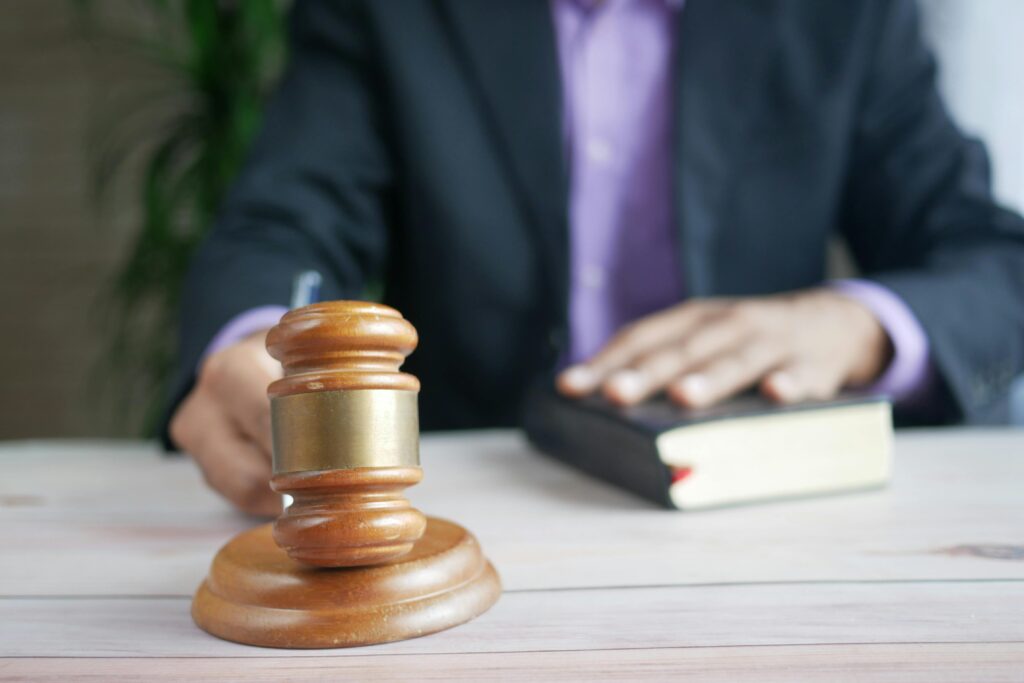
Those are discussed below:-
1)Power of Authority:- The Judiciary is said as the only custodian or the guardian of the constitution. It has the proper authority to lawful implication of the legal document (Indian Constitution). This is ensured as a manual for the smooth functioning or running of a nation “The constitution is a living document” which is amended with different scenarios arising in different time. So, the Judiciary has the authority to make recommendations as well depending on changing circumstances and chaotic situations.
2)Constitution:- Constitution plays a vital role in shaping a country’s democracy and national interests of citizens depending on results of government initiatives taken. Constitution comprises of 448 articles, 25 chapters, 12 schedules and till date 106 amendments in total as of early 2026 currently. This may vary in upcoming durations as well. The composition do not remain the same as with time new sections and sub clauses are inserted and also deleted at times if required to do so. The constitution can be glimpsed by taking a gist of the introductory part PREAMBLE of the Indian Constitution which reads as WE THE PEOPLE OF INDIA, having solemnly resolved to constitute India into a (SOVEREIGN SOCIALIST SECULAR DEMOCRATIC REPUBLIC ) and to secure to all its citizens : JUSTICE social economic and political LIBERTY of thought expression belief faith and worship EQUALITY of status and of opportunity and to promote among them all FRATERNITY assuring the dignity of the individual and the unity and integrity of the nation): IN OUR CONSTITUENT ASSEMBLY………….1949 do HEREBY ADOPT ENACT AND GIVE TO OURSELVES THIS CONSTITUTION. Judiciary is the protector of the constitution and also a defender of the constitution when required.
3)Amendments:- Judiciary must keep a check and balance on the amendments proposed in the parliament or by the different members of the cabinet. Judiciary plays a pivotal role in implying those amendments. Judiciary is responsible for cross examining the ethical conduct of the amendment and the practical relativeness on the ground level citizens. If the amendment is found to be less fruitful or causing harm to any section or community or any group of people. They ensure the rejection of those implication of the particular amendment. These results in showing Judiciary’s active role in protection of the honorary legal document,” “The Indian Constitution” which ensures for public good ethically. The more the number of amendments, the more bulkier and weaker the constitutions becomes. For Example, If a piece is broken and glued together and again broken and glued together.
4)Declining Role of Judicial Activism: Judicial Activism is a procedure whereby Judicial system interprets the law for societal needs, ensuring rights for the people, and providing justice to the people. There is no cases in recent which has gone through Judicial Activism. The PIL system which is a tool of Judiciary to seek Justice from the courts. The role of such has declined but the criminal ratios is still increasing day by day with no records registered in any police station due to which criminals are moving freely scattered and dispersed amongst the society. Example- committing a crime has become like eating a bowl of rice which is done in full freedom. They know very well that there would be no records kept. Hence, victims fall in traps and are killed and raped brutally, are burnt and thrown in paddy fields, and many more…..
5)Judicial Actors:- The Judicial actors play a major role in forming a justice based nation or society. The Judicial Actors are Advocates, Notary, Judges, Chief Justice and their bench of judges, Attorney General, Advocate General, Solicitor General. These Judicial Actors work efficiently when the issues are addressed properly before them, by taking necessary steps, the justice is ensured to and “where there is justice delayed there is high chances of getting denied” In the Indian Judiciary, The Justice is mostly delayed to people who are underprivileged and this is due to lack of money and also due to ethical misconduct of law, which is leaded by money politics or in other words corruption. The system/procedures of Judiciary and the Judicial Actors are the two wheels of the same vehicle needs to be working in co-operation. These two wheels must run in balance for ensuring justice to its people and the nation in whole.
Conclusion: The Current Indian Scenario has declined drastically in upbringing of customs, traditions, values, ethical conduct and morality. This decline has its roots from the beginning of the Great economic depression in the era of 1990’s. Yes, this has impacted also in positive terms due to coming of Liberalization, Privatization, Globalization, which has also lead to digital seepage into human minds. This has lead to intermixing of values and customs where identity of people has become lost out in vain. The overpowering of certain factors which are discussed leads to a choice dilemma for the nations citizens in forming or taking part in electoral politics. The decision making capability becomes vague or faded away. There must be proper political awareness and knowledge subject to participant political culture with a strong sense of efficacy and an active involvement in the procedures. The Judiciary and their role is necessarily need to be properly applied where government rules stands responsive towards its citizens.
The lacking bridge between the elite government and the Below Poverty Line family groups stands responsible for the consequences that occur presently. Bridging this gap from pen paper model to ground work level will stabilize up to the optimum and as a result chaotic situations will get resolved
References:
1 K.K. Ghai, Book – Politics in India.
2 M. Laxmikanth, Book – Indian Polity
3 Dr B.L. Fadia, Dr Kuldeep Fadia, Book – Indian Government and Politics